
Best Robot Lawn Mower Without Perimeter Wire 2026: RTK, LiDAR or Vision Navigation
When you buy through the Amazon links on this page, we may earn a commission at no extra cost to you. Learn more
Last updated October 31, 2026
The best robot lawn mower without a perimeter wire for most yards is the Mammotion LUBA mini 2 AWD 1500H with Garage: its 360° LiDAR and dual-camera AI vision map the lawn from what the mower can see, so trees, a house wall or a narrow side return do not throw off the boundary the way they can on a satellite-only machine. It covers 0.37 acres, drives all four wheels and ships with a garage that keeps its sensors out of sun and rain.
Wire-free mowers now steer by one of three methods, or a mix of them: RTK satellite correction, LiDAR mapping, or camera vision. Each one needs something specific from your property, and the five mowers ranked here are matched to the yards they actually handle.
The best wire-free robot mowers ranked
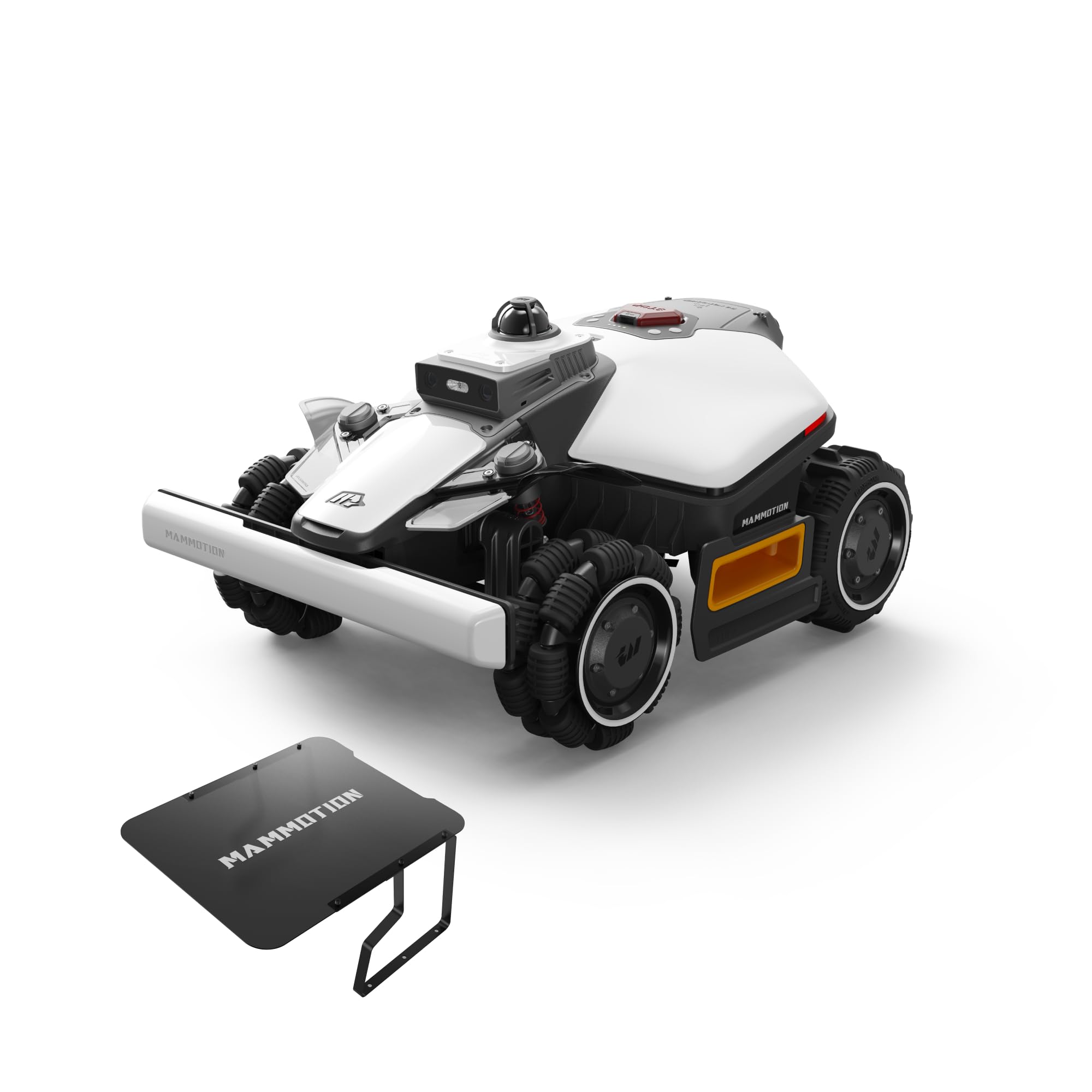
Mammotion LUBA mini 2 AWD 1500H with Garage
See on Amazon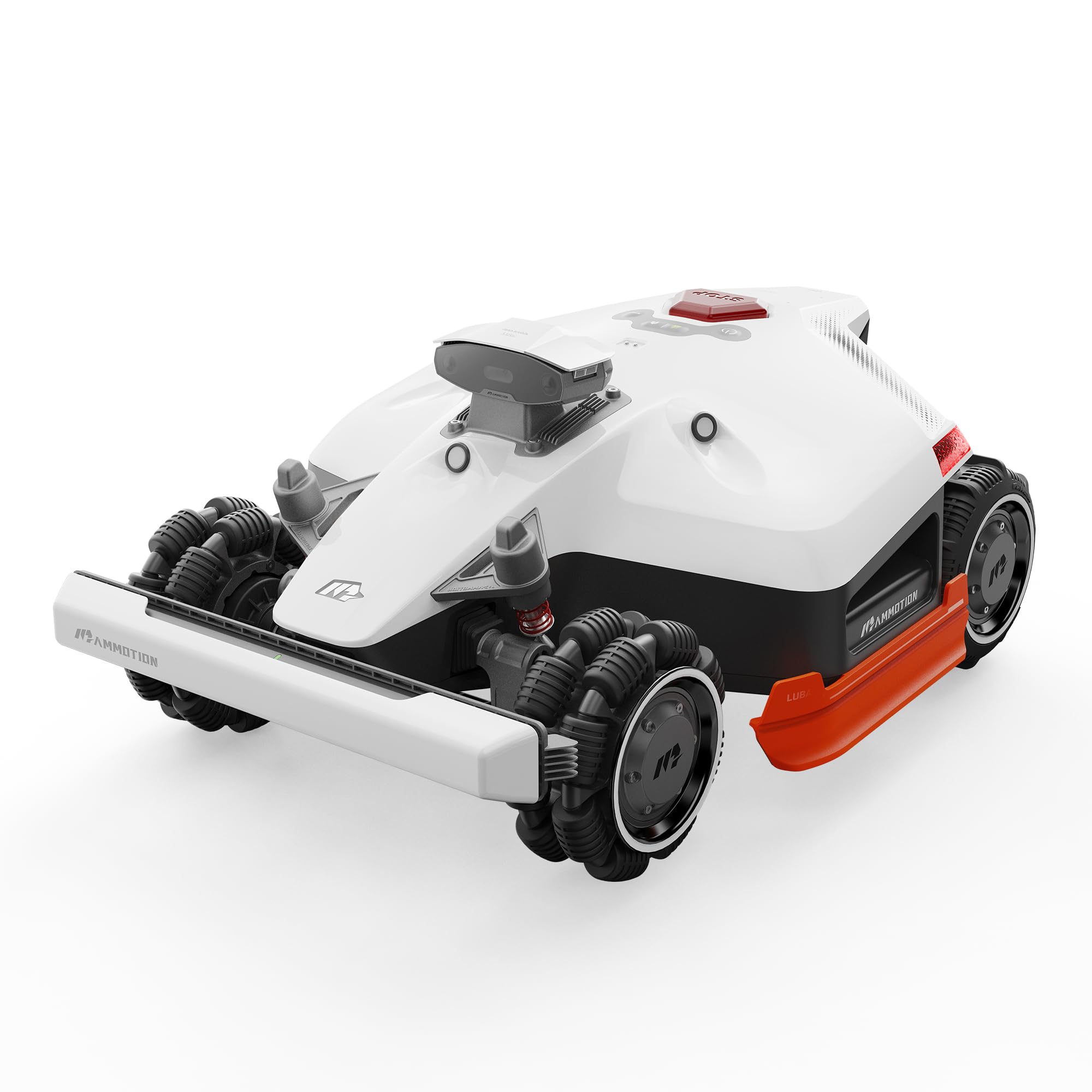
Mammotion LUBA 2 AWD 5000HX
See on Amazon
Navimow i105N
See on AmazonModel comparison
| Model | Price | Rating | Cutting width | Weight | Power source | Best for | |
|---|---|---|---|---|---|---|---|
| | Mammotion LUBA mini 2 AWD 1500H with Garage | $1,928.00 as of 10/31 See on Amazon | ★ 4.5 (250+ ratings) | 7.9 in | 39 lb | Battery powered | Owners of a compact to mid-size lawn with obstructions get 360° LiDAR plus dual-camera AI vision that keeps its bearings. |
| | Mammotion LUBA 2 AWD 5000HX | $2,299.00 as of 10/31 See on Amazon | ★ 4.2 (450+ ratings) | 15.7 in | 41 lb | Battery powered | Owners of a large lawn with long straight runs get a 1.48-acre rating and a 15.7-inch cut. |
| | Navimow i105N | $799.00 as of 10/31 See on Amazon | ★ 4.1 (400+ ratings) | 7.1 in | 24 lb | Battery powered | Owners of a small, clearly defined lawn get an antenna extension kit and Garage S in the box. |
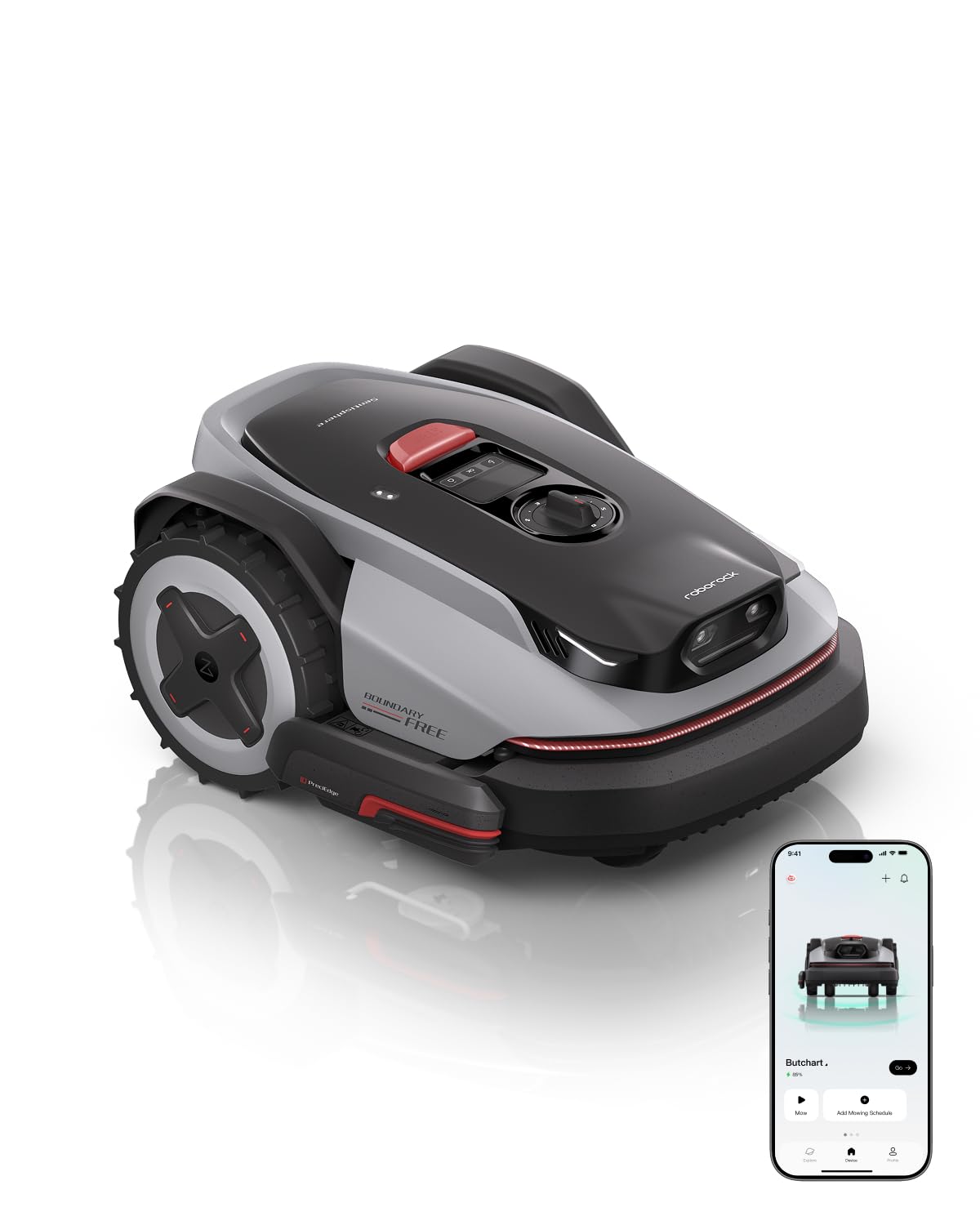 | Roborock RockNeo Q110H | $570.24 as of 10/31 See on Amazon | ★ 4.1 (60+ ratings) | 8.7 in | 27 lb | Battery powered | Owners of a compact lawn with an open sky view and simple boundary get full-band RTK with VSLAM. |
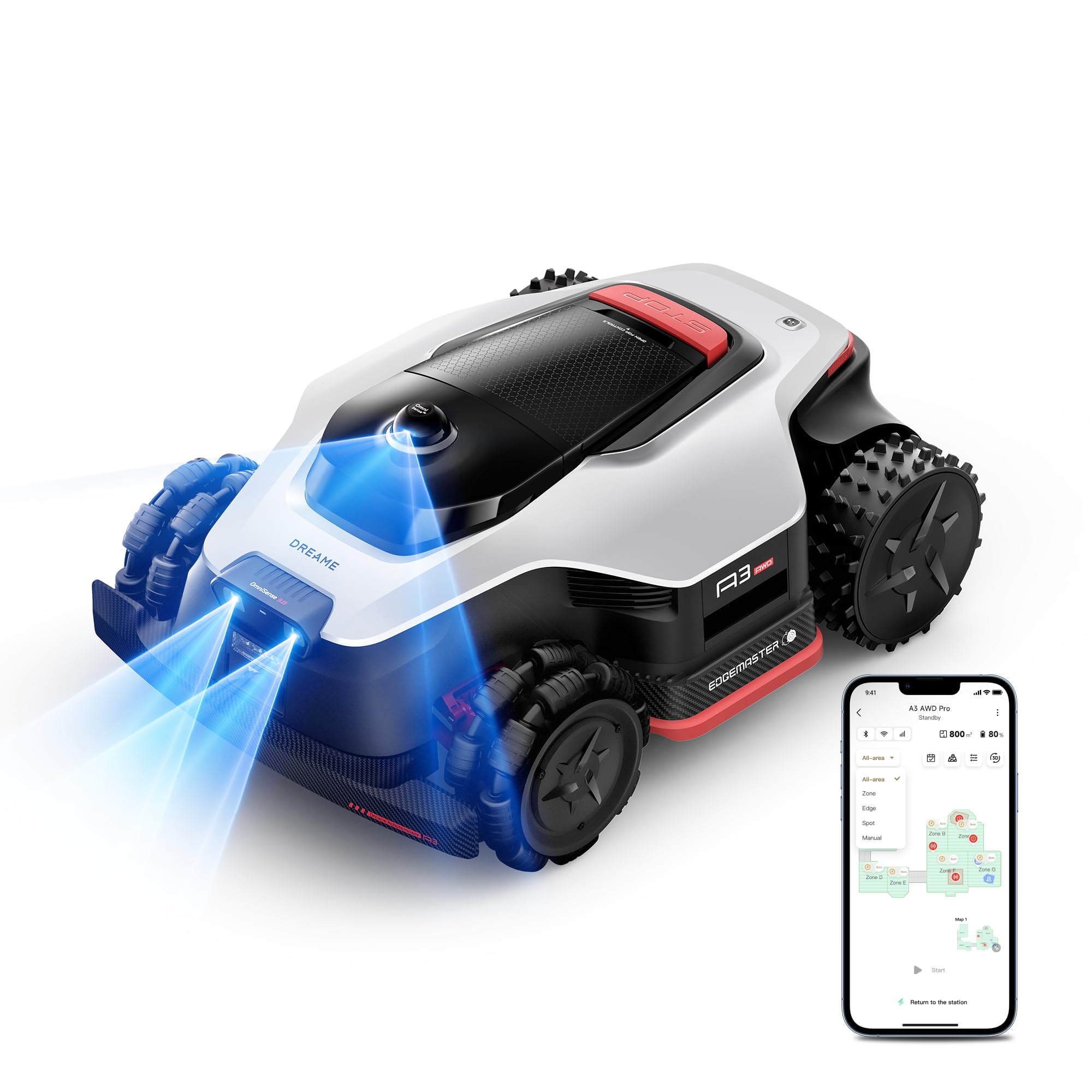 | Dreame A3 AWD 2000 | $1,699.99 as of 10/31 See on Amazon | ★ 4.7 (30+ ratings) | 7.87 in | 26.4 lb | Battery powered | Owners of a shaded yard with trees and a slope get wire-free 360° 3D LiDAR and AI dual vision. |
How wire-free navigation actually works
A wire-free mower still has to answer one question on every pass: where is it, to within a couple of inches? Three technologies answer it, and each is defined by what it physically needs in order to know its position.
RTK GPS
A fixed reference station sits somewhere with a known position and compares the satellite signals it receives against that known spot. It then broadcasts a correction, and the mower applies that correction to its own satellite fix. Plain GPS puts a mower within a few meters, which is fine for a car navigating a road and useless for respecting an invisible line across a lawn. The correction is what turns meters into centimeters, and without it the mower knows roughly where it is but not precisely enough to hold a virtual boundary.
LiDAR with SLAM
A LiDAR mower fires laser pulses and times the return to build a geometric map of walls, fences, beds and buildings, then locates itself inside that map as it moves. It needs no satellites and no correction signal. What it does need is features: physical shapes at a measurable distance. A lawn bounded by a fence, a hedge and a house gives it plenty. A lawn that fades into open ground gives it very little.
Camera vision
One or more cameras classify what they see: grass versus paving, grass versus flowerbed, obstacle versus open lawn. This kind of mower navigates by recognizing the lawn itself rather than by measuring distance to objects, so it needs light and visible contrast. It is the cheapest of the three to build into a machine, and the most dependent on conditions.
Most current wire-free mowers combine two or three of these, because each covers the other's blind spot: RTK plus vision, LiDAR plus vision, LiDAR plus RTK. A mower that pairs a satellite fix with a camera can hold a boundary on open ground and still recognize a flowerbed the satellite never sees.
What RTK needs from your sky and your Wi-Fi
RTK is the most precise of the three technologies and the most sensitive to where it is installed. The correction signal only works if the mower can hear the satellites in the first place.
Satellite visibility
Dense tree canopy, a tall building on the south side, or a narrow side yard between two structures all degrade or interrupt the correction. Accuracy falls away exactly where the mower is trying to hold a virtual boundary, which is why missed strips and boundary drift show up first along a fence under trees. Walk the property with a phone and note where the signal drops before you commit.
The reference station
Either the property hosts an antenna, which needs a mounting point with a clear sky view, a cable run and remapping if it is ever moved, or the mower relies on a network correction service delivered over cellular or Wi-Fi. Network correction removes the antenna but adds a dependency on coverage at the property and, in time, on a service. If the model ships an antenna extension kit, use it: siting the antenna on a roof or a post rather than beside the dock is often the difference between a boundary that holds and one that wanders.
Wi-Fi and connectivity
The dock and the mower need to talk to the app and, for network correction, to the outside world. A backyard at the far end of the house from the router is the classic weak spot. A weak signal does not stop the mower cutting, but it can stop mapping, scheduling and over-the-air updates, and those are the functions you bought the mower for.
What to check before buying
- Walk the lawn with a phone and note where the signal drops.
- Note the tallest obstructions and which side of the lawn they sit on.
- Identify a dock location with an open sky view and a power outlet nearby.
- Check whether the model needs a property antenna or uses a network correction service.
Where LiDAR and camera mowers lose their bearings
Map-building navigation fails in recognizable ways, and most of them are caused by the yard rather than the machine.
Featureless ground
LiDAR locates itself against shapes. A lawn that runs flush into a driveway or a patio with no curb, or a wide open field with nothing to measure against, gives it little to work with. The transition between grass and hard surface is where missed strips appear, because that is where the map has the least to hold on to.
Low light and glare
Camera-based navigation needs light. It cannot mow at night, and low sun, deep shade or wet reflective grass reduce its confidence. A mower that relies on cameras alone is a daytime machine, which matters if you wanted it running overnight.
Rain and damp grass
Wet grass blurs the visual difference between lawn and edge, and clippings on the camera degrade recognition. A damp lawn is the condition that most often produces a patchy cut from a vision-based mower.
Moving obstacles
Pets, children, toys and garden furniture that move between sessions are not in the map. The mower has to re-recognize them on every pass. A stationary object it has learned is easy; a cat is not.
Landscaping changes
Move a shed, plant a hedge or rearrange the patio and the stored map no longer matches reality. The mower will need to remap, and until it does, expect odd routes and missed areas.
Auditing your yard before you buy wire-free
An hour with a tape measure and a phone settles most of the questions a spec sheet cannot answer.
- Measure the mowable lawn, not the property. Subtract beds, patio, driveway, shed footprint and anything the mower cannot reach.
- Walk the boundary and note its shape: straight runs, inward corners, narrow necks between beds, and any place where two zones connect through a gap.
- Measure the narrowest passage the mower must fit through: side gates, gaps between house and fence, paths between beds.
- Measure slope as a percentage, in two places: across the open lawn, and along the boundary where the mower has to turn. A percentage is not a degree, and the two figures are not interchangeable: a steep-looking bank is often less than the number suggests.
- Map the sky. Note overhanging trees, the height and position of buildings, and where the satellite view is open. This decides whether RTK is viable and where an antenna could go.
- Note drop-offs and hazards: retaining walls, ponds, pools, road frontage, steep banks. These need a physical barrier regardless of what the mower can detect.
- Choose the dock position: level ground, power nearby, open sky above, and a route out onto the lawn that does not require reversing through a narrow gap.
- Check connectivity at the dock and at the far corners of the lawn.
Our picks by budget
The RockNeo Q110H is our budget pick because it brings full-band RTK and VSLAM to a quarter acre without the extras a bigger yard would need, and its 45% slope rating covers a gentle bank.
The A3 AWD 2000 is our mid-range pick because LiDAR plus AI dual vision removes the dependence on satellites, and all-wheel drive with an 80% slope capability handles ground the entry tier cannot.
The LUBA 2 AWD 5000HX is our premium pick because 1.48 acres of coverage and a 15.7-inch cut are what a large lawn actually needs, and RTK automatic edge mapping keeps the boundary precise across long runs.
Budget
Mid-range
High-end
Which wire-free mower for which yard
The right wire-free mower is the one whose navigation matches what your yard lets it see, whether that is open sky, a wall to measure against or a camera's view of the grass.
The small, open, simple lawn
A quarter acre or less, a clear sky and a straightforward boundary. The RockNeo Q110H gives you the essentials of wire-free navigation without paying for capacity you will not use.
The awkward, shaded or sloped yard
Trees, buildings, mixed surfaces and a slope that needs all-wheel drive. The A3 AWD 2000 keeps its bearings on LiDAR and vision when the satellites are not perfect.
The large property
An acre and a half of lawn, long runs and a need for a wide cut to get round it. The LUBA 2 AWD 5000HX covers 1.48 acres with a 15.7-inch swath.
The compact yard that still wants the best navigation
0.37 acres with obstructions, handled by 360° LiDAR and dual-camera AI vision, and a garage included to protect the sensors between sessions.
The first-time buyer on a modest lawn
0.125 acre, RTK plus vision with centimeter-level positioning, and a box that includes the garage, 4G access, a rough terrain kit and an antenna extension kit.
Our verdict on the best robot lawn mower without perimeter wire
The Mammotion LUBA mini 2 AWD 1500H with Garage is the pick for most yards because LiDAR plus dual-camera vision covers the widest range of real properties: it holds its boundary under trees, beside a wall and through a narrow side return, and the included garage protects the sensors it steers with. For a large lawn, the LUBA 2 AWD 5000HX covers 1.48 acres with a 15.7-inch cut and RTK automatic edge mapping. For a shaded or sloped yard, the Dreame A3 AWD 2000 works without satellites at all. The Roborock RockNeo Q110H is the value entry point for a compact, open lawn, and the Navimow i105N is the best-equipped small-lawn package, antenna extension kit included.
Detailed model analysis
A wire-free mower is only as good as the navigation it uses, and each of these five is built around a different answer to the question of where it is.
Mammotion LUBA mini 2 AWD 1500H with Garage
The Mammotion LUBA mini 2 AWD 1500H with Garage navigates with 360° LiDAR and dual-camera AI vision instead of relying on satellites alone. LiDAR scans the space around the mower, and the two cameras read what lies ahead.
It is stated for 0.37 acres, so it fits a compact to mid-size lawn. For a bigger lawn, the Mammotion LUBA 2 AWD 5000HX states 1.25 acres.
All-wheel drive and an 80% maximum slope help on banks and uneven ground. The Mammotion LUBA 2 AWD 5000HX and the Dreame A3 AWD 2000 state the same slope figure, so this is not an edge over them.
The blade cuts a 7.9 in swath, and the height adjusts from 2.2 to 4 inches. A garage is included, and DropMow is among its features.
The main limit is size. It weighs 39 pounds, which is much heavier to carry than the Navimow i105N at 24 pounds.
It suits owners of a compact to mid-size lawn with obstructions who want LiDAR and camera navigation, plus the grip of four driven wheels on a slope.
- Brand: Mammotion
- Cutting width: 7.9 in
- Cutting height: 2.2 in to 4 in
- Weight: 39 lb
- Power source: Battery powered
- Dimensions: 23 in deep, 18 in wide and 12.6 in high
Mammotion LUBA 2 AWD 5000HX
The Mammotion LUBA 2 AWD 5000HX maps its lawn with RTK automatic edge mapping, using satellite positioning to find the grass edges. UltraSense AI Vision adds cameras on top of the RTK positioning.
Size is its strength: 1.25 acres nominal and 1.48 acres maximum, against 0.37 acres for the Mammotion LUBA mini 2 AWD 1500H with Garage.
The cutting width is 15.7 inches, against 7.1 to 8.7 inches on the other four mowers. Wider passes mean fewer laps on a large lawn with long straight runs.
Height adjusts in 18 positions from 2.2 to 4 inches. All-wheel drive handles slopes up to 80%, and 4G connectivity is included.
The cost of that reach is bulk. It weighs 41 pounds, the most of the five. On a small yard, the Navimow i105N at 24 pounds is easier to handle.
We see it suiting owners of a large lawn with long straight runs who want RTK mapping backed by cameras.
- Brand: Mammotion
- Cutting width: 15.7 in
- Cutting height: 2.2 in to 4 in
- Height positions: 18
- Weight: 41 lb
- Power source: Battery powered
Navimow i105N
The Navimow i105N is a perimeter wire free mower that positions itself with RTK plus vision. Its cameras build 3D maps with Visual SLAM, which helps where satellite signal is weak. Positioning is accurate to the centimeter.
VisionFence recognizes over 150 object types, sorted into animals, tools and fixed obstacles, and everyday obstacles. The mower steers around them. You draw a virtual boundary in the app, which also handles multi-zone management.
Edges get two options. Standard mode, the default, keeps a safe buffer from the edge, while ride-on mode follows the edge precisely and leaves less uncut grass.
It weighs 24 pounds, so it is easy to carry. Its stated noise level is 58 dB(A).
The limit is lawn size. It mows up to 0.125 acre only, with a 7.1 in cutting width. For more, consider the Roborock RockNeo Q110H, which covers up to 1/4 acre.
It suits owners of a small, clearly defined lawn who want RTK and camera positioning in a light package.
- Brand: Navimow
- Cutting width: 7.1 in
- Max lawn size: 0.125 acre
- Weight: 24 lb
- Power source: Battery powered
- Dimensions: 21.5 in long, 11.2 in wide and 15.2 in high
Roborock RockNeo Q110H
The Roborock RockNeo Q110H navigates with Full-Band RTK plus VSLAM, with no boundary wire. RTK gives satellite positioning, and VSLAM uses camera images to track where the mower is. Auto mapping builds the lawn map for you.
Because RTK relies on satellites, a clear view of the sky matters. Trees and walls close to the lawn work against it. AI vision obstacle avoidance helps it steer around objects, and you control everything from the app.
It runs for 130 minutes on a battery and covers up to 1/4 acre. The cutting width is 8.7 inches, and the height adjusts from 1.6 to 3.1 inches. It weighs 27 pounds.
Slopes are its weak point. The stated maximum is 45%, well under the 80% of the Mammotion LUBA 2 AWD 5000HX, Mammotion LUBA mini 2 AWD 1500H with Garage and Dreame A3 AWD 2000.
Its maximum cutting height of 3.1 inches is also lower than on those three, so it won't handle taller grass as well. It suits owners of a compact lawn with open sky.
- Brand: Roborock
- Cutting width: 8.7 in
- Cutting height: 1.6 to 3.1 in
- Run time: 130 min
- Weight: 27 lb
- Power source: Battery powered
Dreame A3 AWD 2000
The Dreame A3 AWD 2000 navigates with 360° 3D LiDAR and AI dual vision, with no boundary wire. LiDAR maps what the mower itself sees, and the two cameras add recognition on top.
All-wheel drive handles slopes up to 80%, or 38.7°, the same figure as the Mammotion LUBA mini 2 AWD 1500H with Garage. It maps 0.50 acres in minutes, which describes mapping speed, not mowing capacity.
Height adjusts from 1 to 4 inches, so it cuts closer than the Roborock RockNeo Q110H, which starts at 1.6 inches. The cutting width is 7.87 inches.
The body uses hard-anodized aluminum and stainless steel and weighs 26.4 pounds, a little lighter than the Roborock RockNeo Q110H at 27 pounds. It has a 3-year warranty and a 45-minute fast charge.
It has 4G connectivity, but the free service lasts only 1 year. It suits owners of a shaded, sloped yard who want LiDAR and cameras without wire.
- Brand: Dreame
- Cutting width: 7.87 in
- Cutting height: 1 to 4 in
- Weight: 26.4 lb
- Power source: Battery powered
- Dimensions: 25 in long, 17.05 in wide and 11.57 in high
Frequently asked questions
Wire-free mowing raises questions about installation, sky view and slope that a spec sheet rarely answers.
Do I still have to install anything?
A dock on level ground with power, a mapping walk around the perimeter, and on RTK models either an antenna with a clear sky view or a network correction service. No wire is buried, but the dock and the antenna are physical installations.
RTK, LiDAR or camera vision, which do I need?
RTK for a large, open lawn with a clear sky view; LiDAR for shade, buildings and complex boundaries; camera vision for a small, clean, well-lit lawn. Most current mowers combine two of the three, which is the safer choice when the yard is mixed.
Will it work under trees or in a narrow side yard?
It depends on the navigation. RTK accuracy degrades under dense canopy and between tall buildings, while LiDAR and vision handle those conditions better. Measure the narrowest passage before buying, because a mower that cannot fit through it cannot reach that part of the lawn.
Does it need Wi-Fi?
It needs connectivity for the app, scheduling and updates, and network-based RTK needs it for correction. A weak signal at the far end of the lawn affects control and mapping more than it affects cutting.
Will it mow in the rain or at night?
LiDAR and RTK mowers can operate in low light; camera-only mowers need daylight. Wet grass is difficult for vision-based navigation regardless of the model, so a damp lawn is the condition to watch.
What happens to a wire-free mower's map when I move a shed or plant a hedge?
A stored map is a snapshot of your yard, so moving a shed, planting a hedge or rearranging the patio leaves the mower working from a layout that no longer matches reality. Until you remap, expect odd routes and missed areas. Plan any landscaping change around a fresh mapping run rather than assuming the mower will simply adjust on its own.