Best Rough Terrain Mower 2026: Handling Slopes, Bumps and Tall Grass
When you buy through the Amazon links on this page, we may earn a commission at no extra cost to you. Learn more
Last updated October 31, 2026
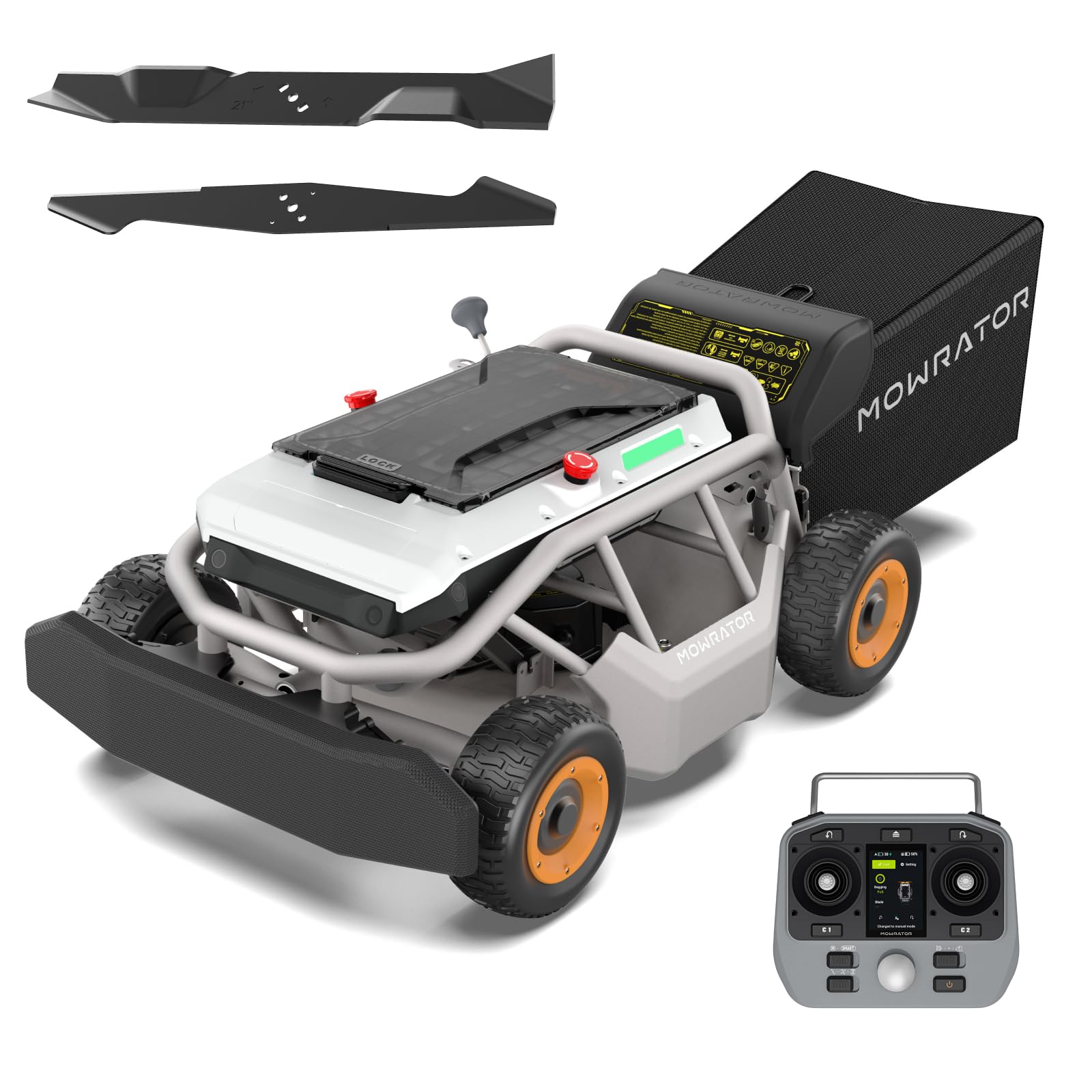
The Mowrator S1 4WD 12Ah remote control lawn mower is our pick for most rough ground: four driven wheels, a 21-inch cut and a slope rating of up to 75% (37°) on its standard tires, rising to 85% (40°) on wide tires and 119% (50°) on deformable tires, with the operator standing off the slope. Rough terrain is not one problem, though. A tilted bank, a rooty yard, soft wet ground and grass that has grown knee-high each call for a different machine and a different technique.
The machines covered are residential mowers. Brush, saplings and land clearing belong to a brush cutter or a flail mower, not to a lawn mower.
The best rough terrain mowers for 2026
Mowrator S1 4WD 12Ah remote control lawn mower
See on Amazon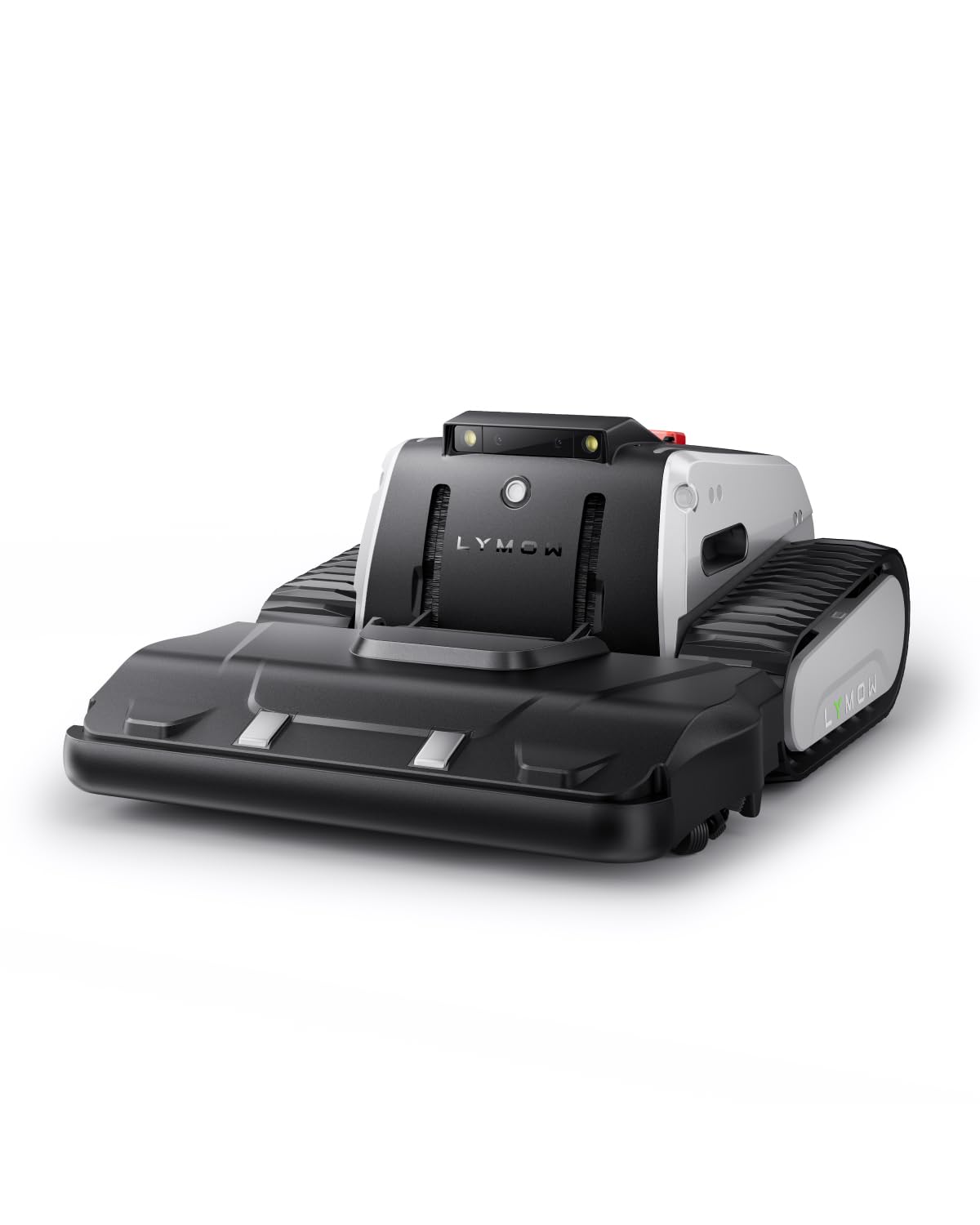
Lymow One Plus
See on Amazon
Infront INFRJBT550
See on AmazonModel comparison
| Model | Price | Rating | Cutting height | Cutting width | Weight | Best for | |
|---|---|---|---|---|---|---|---|
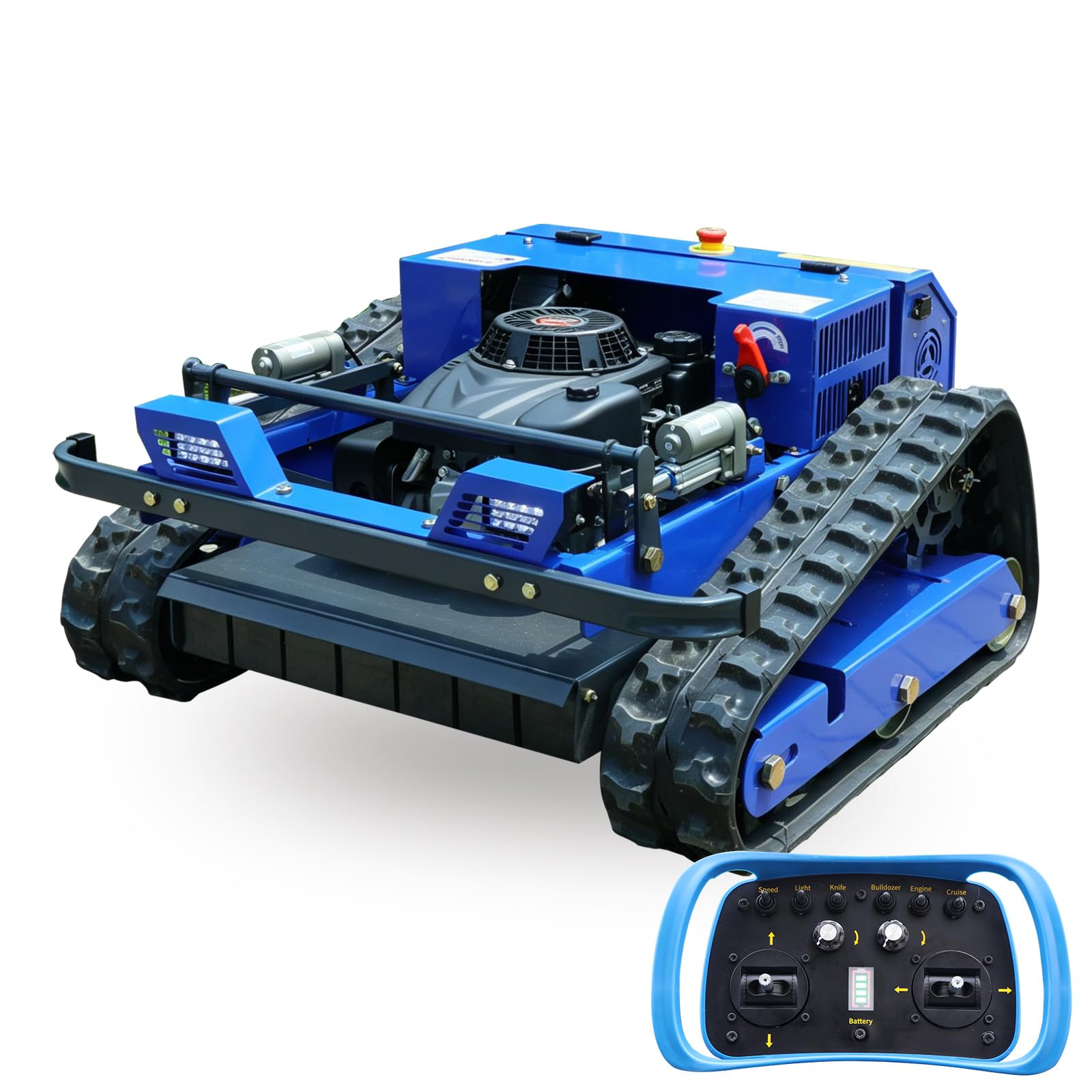
| | Mowrator S1 4WD 12Ah remote control lawn mower | $3,499.00 as of 10/31 See on Amazon | ★ 4.5 (50+ ratings) | 1.5 to 4.3 in | 21 in | 132 lb | Homeowners with a steep bank who want four-wheel drive and the highest slope rating here, up to 75% (37°) on standard tires. |
| | Lymow One Plus | $3,199.00 as of 10/31 See on Amazon | ★ 4.1 (30+ ratings) | 1.2 to 4 in | 16 in | not stated | Owners of a large lot wanting the biggest daily coverage get 1.73 acres and 25,000 sq ft per charge, offline. |
| | Infront INFRJBT550 | $2,049.00 as of 10/31 See on Amazon | ★ 4.6 (17 ratings) | 0.79 to 5.9 in | 19.68 in | 374 lb | Buyers who want tracks and hybrid power for fence lines, ditches and tight banks rather than open acreage. |
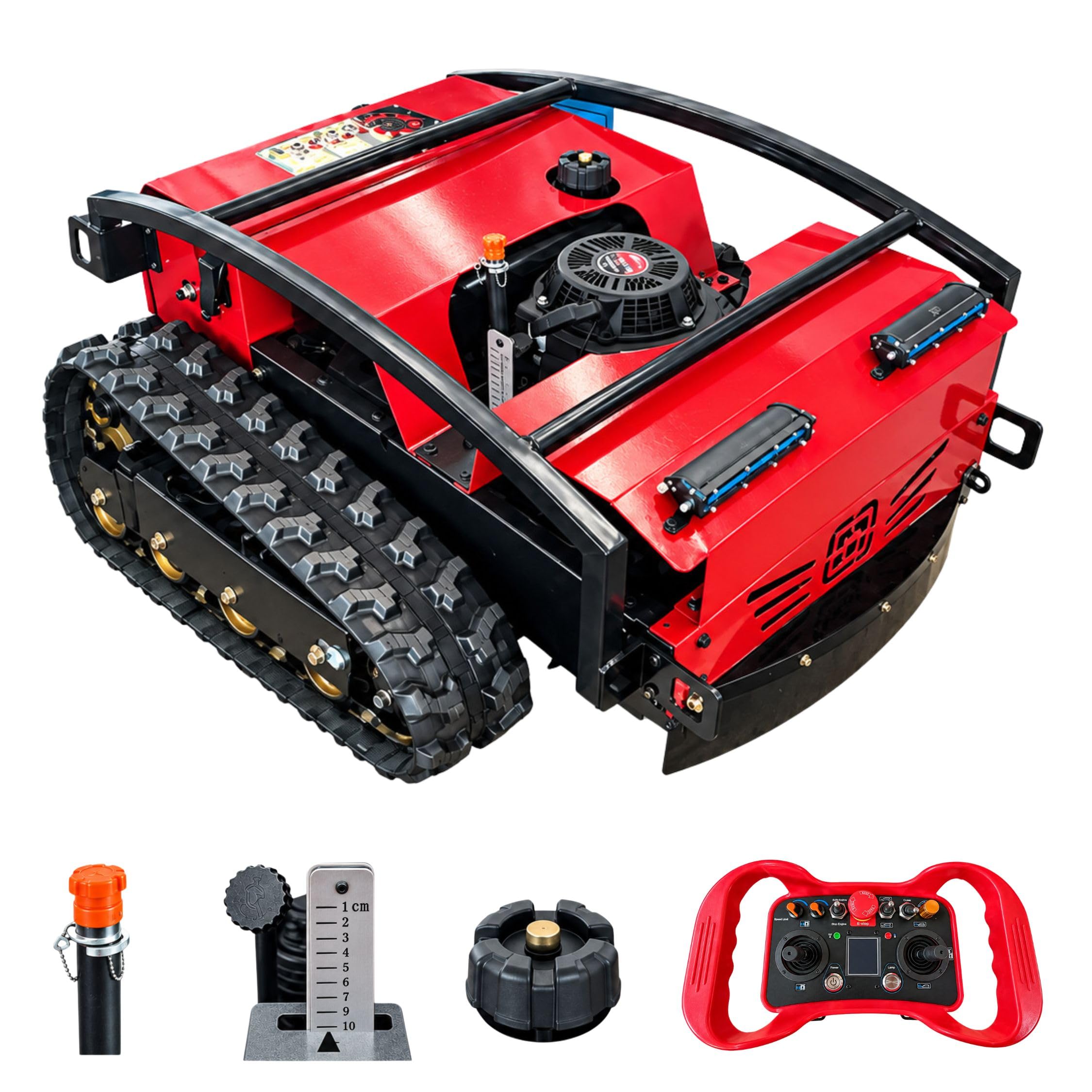 | Daredevil Mower remote control tracked mower | $3,499.99 as of 10/31 See on Amazon | ★ 4.3 (20+ ratings) | 1.18 to 6 in | not stated | 325 lb | Slope owners who want tracked traction and a 24-inch cut, with gas or electric power and a 6L auxiliary fuel tank. |
 | Aiweiya AWY-550 | $1,748.00 as of 10/31 See on Amazon | ★ 4.0 (30+ ratings) | 1.1 to 5.9 in | 21.6 in | 286 lb | Homeowners stepping into slope mowing who accept gas upkeep and want tracked traction without the weight of bigger crawlers. |
What makes a mower rough terrain capable
The difference between a rough terrain mower and a standard one is mechanical, not cosmetic. A machine sold for uneven ground carries parts that let it roll over obstacles, keep its deck off the dirt and survive the strikes that rough ground delivers.
Drive wheels and tires
Larger-diameter drive wheels roll over dips and roots instead of dropping into them, and the difference shows up the first time a small wheel wedges against a root crown. Pneumatic tires absorb bumps that solid wheels pass straight to the deck and the operator's hands. The tread pattern decides whether the wheel grips wet grass or spins in place.
Ground clearance
The deck and chassis need room to clear stubble, stones and root crowns. A low-slung deck grounds out on the first high spot, stalls the blade and leaves a gouge. Check the clearance under the deck at your usual cut height before anything else.
Deck behavior
A floating or pivoting deck, plus anti-scalp gauge wheels at the deck corners, lets the deck ride over high spots rather than dig in. A rigid deck bolted flat to the frame transfers every bump into a scalp line across the lawn.
Reinforced cutting components
Heavier blades and spindles survive the strikes that rough ground delivers. Standard blades bend on a hidden stone, and standard spindles develop play that shows up as a wobble and an uneven cut.
Traction aids
All-wheel drive, a locking or limited-slip differential and weight over the drive axle all decide whether the machine climbs out of a wet dip or sits in it spinning.
Cut-height range
A wide range with a high top setting lets you run the deck high over uneven ground and take tall grass down in stages. A deck that tops out at 3 inches has no answer for a field that has gone to seed.
Tracked and remote-controlled formats
Tracks spread load and climb where wheels slip, and remote control keeps the operator off the slope entirely. Treat these as a distinct format rather than an upgrade to a push mower: they are heavier, they need a remote in your hands, and they suit ground a walk-behind should not touch.
How to mow safely on slopes and hillsides
The governing number is the manufacturer's published slope rating for your machine. Where none is published, treat 15° as the ceiling. That default comes from safety guidance for riding mowers, and it is the figure to fall back on when a spec sheet stays silent.
Degrees and percent grade are not the same thing
Percent grade is rise divided by run, times 100. A 15% grade is about 8.5°, 25% is about 14°, 45% is about 24°, 50% is about 26.6°, 75% is about 37°, and 100% is 45°. A listing that says "45" may mean degrees or percent, and the two are far apart: 45° is nearly twice as steep as a 45% grade.
Typical ceilings by format
- Walk-behind mowers handle the least slope, limited by where the operator can keep footing.
- Lawn tractors and zero-turns are generally limited to around 15°, and zero-turns often less; they are the least stable on a side slope.
- Tracked and remote-controlled machines are rated far higher because nobody is aboard.
Which way to drive
Walk-behind mowers are driven across the face of a slope, so the machine stays level while you walk below it. Ride-on machines are driven straight up and down. Never turn or stop on a slope with a ride-on; both moves shift the weight sideways.
Edges, wet grass and the trimmer
Keep drive wheels well back from drop-offs, ditch edges and retaining walls. Do not mow wet grass on a slope, because wet turf gives up grip without warning. Where the ground is too steep or too broken for the machine, stop and switch to a string trimmer: it reaches what the mower cannot, and you stay on flat ground.
Roll bar and seat belt
On ride-on machines, the roll bar and seat belt are used together. Without the bar, the belt is not worn, because a belted operator cannot get clear of a machine going over.
Choosing between walk-behind, tow-behind and ride-on rough terrain mowers
Match the format to the property, not to the spec sheet. Two yards of the same size can call for completely different machines once slope, obstacles and footing come into it.
Walk-behind mowers
Best on bumpy, rooty ground under about half an acre and on slopes the operator can stand on. Your own weight and footing are the traction. Self-propelled drive, ideally rear-wheel or all-wheel, is what makes the format viable, and large rear wheels are the single biggest upgrade.
Tow-behind mowers
Pulled by an ATV or a tractor, a tow-behind covers large open acreage fast and cheaply. It needs a tow vehicle, it cannot work tight or obstructed ground, and it is not a lawn-finish machine.
Ride-on mowers
Lawn tractors and zero-turns are the answer for large, gently uneven lawns. A lawn tractor with a pivoting front axle and a locking differential is the more forgiving of the two on rough ground. A zero-turn trades rough-ground composure for speed and maneuverability on smooth ground.
Tracked and remote-controlled mowers
For ground that is genuinely steep, soft or overgrown. The operator stands clear, tracks climb and spread load, and the machine takes ground a ride-on should not.
Robotic mowers
For a lawn that is uneven but within a rated slope, where the machine works daily and never takes a big bite. Daily cutting keeps the grass short, which is itself a defense against scalping.
The one-line rule for each
- Walk-behind: small yard, bumpy ground, slope you can stand on, and you want to walk.
- Tow-behind: large open acreage, a tow vehicle already in the shed, and finish does not matter.
- Ride-on: large lawn, gentle unevenness, and you want to ride.
- Tracked or remote-controlled: steep, soft or overgrown ground, and you want to stand back.
- Robotic: uneven but rated slope, and you want the machine to handle it daily.
Keeping the deck level over dips and ridges
Scalping happens when the deck's lowest point meets the highest ground. The blade takes the grass down to the soil, the lawn turns brown in stripes, and the deck takes a beating at the same time.
Raise the cut height
Over bumpy ground, raise the cut by roughly half an inch to an inch and let the grass stay longer. A taller cut leaves room for the deck to ride a high spot without the blade reaching soil.
Let the deck follow the ground
Deck suspension and flotation, anti-scalp wheels and pneumatic tires at the correct pressure let the deck follow the ground. Over-inflated tires make the deck rigid and the ride harsh, so check pressure before blaming the machine.
Slow down
Ground speed is the variable you control. A slower pass lets the deck ride a bump instead of being launched by it, and the cut comes out cleaner on ground that keeps changing height.
Change the pattern
Vary the direction between cuts so ruts and high spots are not hit the same way every week. Alternating the pattern spreads the wear on the lawn and on the deck.
Fix the worst spots
Fill or roll the worst dips and root crowns before blaming the mower. A lawn that has been leveled is easier on any machine, and the improvement lasts longer than any deck adjustment.
Keep the blades sharp
A dull blade tears rather than cuts and leaves the lawn more vulnerable where the deck has scalped. Sharp blades also draw less power, which matters on a machine already working hard over rough ground.
Traction, tires and weight distribution on rough ground
Grip on rough ground depends on the tread, the tire pressure, where the weight sits and whether both drive wheels pull.
Tread pattern
Turf tires protect a lawn but spin on wet slopes and loose soil. Lug or bar treads grip but tear turf. The compromise is a deep turf tread or an all-terrain pattern, and the right answer depends on whether the ground is lawn or rough.
Tire pressure
Correct pressure gives the contact patch its shape. Soft tires float and grip on soft ground; hard tires roll easily but slip. Check pressure with a gauge rather than by eye, and adjust for the season.
Weight placement
Weight over the drive wheels is traction. Too little and the wheels spin; too much and the machine sinks in soft ground. Ballast and the operator's position both matter, and on a remote-controlled machine the ballast is the lever you have.
Differential lock or limited-slip
On a ride-on, a locking differential keeps both rear wheels driving when one loses grip. That is the difference between climbing out of a wet dip and sitting in it.
Tracks versus wheels
Tracks spread load and climb; wheels steer and turn tighter. A tracked machine is the better choice on soft, steep or broken ground, and a wheeled one is easier on a lawn that needs a clean finish.
Adjust for the terrain
Drop tire pressure slightly for soft ground, keep it up for hard uneven ground, and clean mud out of the tread before it packs solid. Packed tread turns a gripping tire into a slick one.
Our picks by budget
The Aiweiya AWY-550 is our budget pick because it brings the tracked, remote-operated format at the lowest price level on the page, with the operator standing clear.
The Lymow One Plus is our mid-range pick because the money goes into automation: all-wheel-drive tracked treads rated for 45°, wire-free navigation and daily cutting with nobody on the ground.
The Daredevil Mower remote control tracked mower is our premium pick because it pairs a 55° climb with a 1.6 gal (6L) auxiliary fuel tank for long sessions on steep, heavy ground.
Budget
Mid-range
High-end
Which rough terrain mower for which buyer
The right machine follows from the ground you actually own: how steep it is, how soft, how overgrown and whether you want to walk, ride or stand back.
Steep bank, no riding
A remote-control machine keeps you off the grade entirely. The Mowrator S1 4WD is rated for slopes up to 75% (37°) and cuts 21 inches wide, so you can work a bank from a safe spot at the bottom.
Large sloping lawn, cut automatically
The Lymow One Plus works the slope on its own, with all-wheel-drive tracked treads rated for 45° and RTK plus vision navigation that needs no boundary wire along the bank. It covers up to 1.73 acres a day, so a big lawn gets done without you pushing.
Tall grass and a low first cut
The Infront INFRJBT550 adjusts from 0.79 to 5.9 inches, so you can drop low for a lawn cut or raise up for grass that has run away. Its 19.68-inch rotary deck and 374-pound build suit ground you would rather not walk.
Widest cut on rough ground
The Daredevil Mower takes a 24-inch cut, the widest here, and its remote control keeps you clear of the rough stuff. The deck spans 1.18 to 6 inches across 5 positions, so it handles both a tidy lawn and heavy growth.
Fine height tuning on a budget
The Aiweiya AWY-550 gives you 49 cutting height positions between 1.1 and 5.9 inches, far more than the 5 on most machines here, so you can dial in the exact cut. Remote control keeps you off the slope while the 21.6-inch deck works.
Our verdict on the best rough terrain mowers
The Mowrator S1 4WD 12Ah remote control lawn mower wins for the widest spread of steep ground, because its slope rating climbs with the tire you fit, from 75% (37°) to 119% (50°), and four driven wheels keep it moving where two would spin. The Daredevil Mower remote control tracked mower takes the steepest ground on the page at a 55° climb and covers the largest area with its 24-inch cut and 1.6 gal (6L) auxiliary tank. The Aiweiya AWY-550 is the tightest-budget route into the tracked remote format, with a rated 100% (45°) slope. One caveat holds for all three: if your lawn is merely bumpy and flat, none of these is the right buy, and a walk-behind or a lawn tractor will do the job for less.
Detailed model analysis
A mower earns its place on rough ground through its slope rating, its traction and its cut-height range, and each of these machines leans on a different one.
Mowrator S1 4WD 12Ah remote control lawn mower
Four driven wheels are rated up to 75% (37°) on the standard tires, 85% (40°) on wide tires and 119% (50°) on deformable tires, so the tire you fit sets the rating.
The 10-inch wheels roll over dips and root crowns, and the remote control keeps you off the grade entirely.
The deck cuts 21 inches wide and adjusts from 1.5 to 4.3 inches across five positions. The 12Ah LiFePO4 battery runs about 1 h 30 min and covers up to 0.75 acres per charge, recharging in about 70 minutes.
Four ultrasonic sensors watch for obstacles, a front bumper takes the knocks, and sensors stop the blades if the mower tilts or flips. The machine weighs 132 lb.
For long storage, leave the battery at 70% (three indicator bars) and keep it between 32 and 95°F. Expect 2 to 5% self-discharge per month. The warranty is two years.
It suits the owner of a bank, a ditch edge or a rutted field who wants the widest spread of slope capability and accepts steering by remote in semi-automatic mode.
- Brand: Mowrator
- Cutting width: 21 in
- Battery capacity: 12 Ah
- Cutting height: 1.5 to 4.3 in
- Weight: 132 lb
- Power source: Battery powered
Lymow One Plus
This is the automatic answer to a sloping lawn. Its all-wheel-drive tracked treads are rated for 45° slopes, so it climbs where a wheeled robot would slip. Wire-free RTK-plus-vision navigation means no boundary wire to bury.
A 16-inch dual-blade cut adjusts from 1.2 to 4 inches. The 528Wh battery covers up to 25,000 square feet per charge.
The machine weighs about 22 lb (10 kg) and is built in aluminum.
The app handles scheduling and settings. The mower works normally offline, with Wi-Fi or a hotspot needed only for over-the-air updates. A built-in Privacy Mode keeps data out of the cloud.
It suits the owner of a large, sloping lawn who wants the grass cut without being on it, and who would rather set a schedule than hold a remote.
- Brand: Lymow
- Cutting width: 16 in
- Cutting height: 1.2 to 4 in
- Power source: Battery powered
- Operation mode: Automatic
- Dimensions: 29.4 in deep, 22 in wide and 12.6 in high
Infront INFRJBT550
The Infront INFRJBT550 pairs all-terrain tracks with a gas-electric hybrid drivetrain in a remote-controlled format. The remote control comes included, so you can stand clear of the slope while the machine works.
The tracks spread load and grip broken ground, which suits rough, mixed terrain. The hybrid power carries the load of heavy grass, so thick growth is part of the job this machine is meant to handle.
The deck cuts 19.68 inches wide, and the cutting height adjusts from 0.79 to 5.9 inches. That range reaches low for a tidy lawn and high for grass that has run away.
It uses a rotary cutting style and a metal build. The machine weighs 374 lb, so it is a heavy unit to run, and you should be comfortable handling something of that size by remote.
We see it as a fit for the owner of rough, mixed ground who wants tracks under the machine and a wide height range, and who is at ease with a heavier unit.
- Brand: Infront
- Cutting width: 19.68 in
- Cutting height: 0.79 to 5.9 in
- Weight: 374 lb
- Dimensions: 35.5 in deep, 36.6 in wide and 21 in high
- Cutting type: Rotary
Daredevil Mower remote control tracked mower
The Daredevil Mower is a tracked, remote control machine rated to climb 55° slopes. Remote control keeps you off the grade, so it suits ground you would not walk up with a mower in front of you.
A 9 HP gas engine drives it. The deck adjusts from 1.18 to 6 inches, so heavy growth gets a high first pass.
A 1.6 gal (6L) auxiliary fuel tank stretches sessions on large ground.
The build is metal and the machine weighs 325 lb. The warranty is one year.
We see it fitting the owner of a steep embankment or a large overgrown field who accepts a gas engine and its upkeep.
- Brand: Daredevil Mower
- Power source: Gasoline and electric
- Control: Remote controlled
- Weight: 325 lb
- Dimensions: 38 in deep, 42 in wide and 22 in high
- Cutting height: 1.18 to 6 in
Aiweiya AWY-550
We see the Aiweiya AWY-550 as a tracked, remote-controlled mower with a rated maximum slope of 100% (45°), the figure that matters most on a steep bank.
Its oil-electric hybrid crawler track design puts tracks under the machine and keeps the operator standing clear.
The deck cuts 21.6 inches wide and adjusts from 1.1 to 5.9 inches, a range that handles both a maintained lawn and grass left too long.
The machine weighs 286 lb and is built from alloy steel and plastic. Its maker describes it for large turf areas.
You will get the most from it if you own a steep bank and want the tracked remote format with its slope capability.
- Brand: Aiweiya
- Cutting width: 21.6 in
- Cutting height: 1.1 to 5.9 in
- Weight: 286 lb
- Dimensions: 38.5 in long, 22 in wide and 36 in high
- Operation mode: Remote control
Frequently asked questions
Slope ratings, tire choice and cutting technique decide whether a rough terrain mower stays safe and keeps the lawn alive.
What is a rough terrain mower?
It is a mower built to work ground that is not flat and not smooth: a slope, a rooty yard, soft soil or grass left too long. The parts that make it capable are larger drive wheels, pneumatic tires, a deck that floats over high spots, reinforced blades and spindles, and often all-wheel drive or tracks.
Is a rough terrain mower the same as a brush mower?
No. A mower asked to take down saplings or brambles will bend blades and damage its spindle, because its cutting parts are built for grass, not woody stems.
What slope can a rough terrain mower handle?
It depends on the format. Where a machine publishes no rating, treat 15° as the ceiling.
Do I need tracks or are wheels enough?
Wheels are enough on a lawn that is uneven but firm, and they steer and turn tighter. Tracks spread the machine's weight and climb better on soft, steep or broken ground, which is why they show up on machines built for banks and wet fields.
Can a remote-control mower handle a slope I would not ride?
Yes, that is what the format is for. With nobody aboard, the machine can be rated for grades a ride-on should never see, and you stand on flat ground with the remote. Keep yourself and bystanders clear of the slope below the machine in case it loses grip.
How do I stop scalping on bumpy ground?
Raise the cut by half an inch to an inch, slow your ground speed, and check that the tires are at the right pressure so the deck can follow the ground. Vary your mowing direction between cuts, and fill the worst dips and root crowns so the deck has less to ride over.
How do I measure the slope of my yard before I buy?
Lay a straight board on the slope, put a level on top and lift one end until the bubble centers. Measure the height you lifted and the length of the board, then divide the rise by the run and multiply by 100 to get the percent grade. A phone level app gives you the angle in degrees directly.