
Best Side-Discharge Push Mower 2026: Tall, Thick Grass Without Clogging
When you buy through the Amazon links on this page, we may earn a commission at no extra cost to you. Learn more
Last updated October 31, 2026
The PowerSmart DB8618C is the best side-discharge push mower for tall, thick grass because side discharge is its discharge mode: clippings leave the deck through the chute instead of being recirculated or lifted into a bag, so the engine spends its power cutting. Its reinforced 18-inch deck and 144cc four-cycle OHV engine suit a smaller or tighter yard where a full-width pass through overgrown grass matters more than a wide cut.
If you want a wider 21-inch cut and bigger wheels for rough ground, the Senix L6 is the step up. The Senix LSPG-M14 adds mulching and bagging on the same deck, and the Craftsman CMEMW213 is the corded answer for a small yard.
The best side-discharge push mowers for 2026
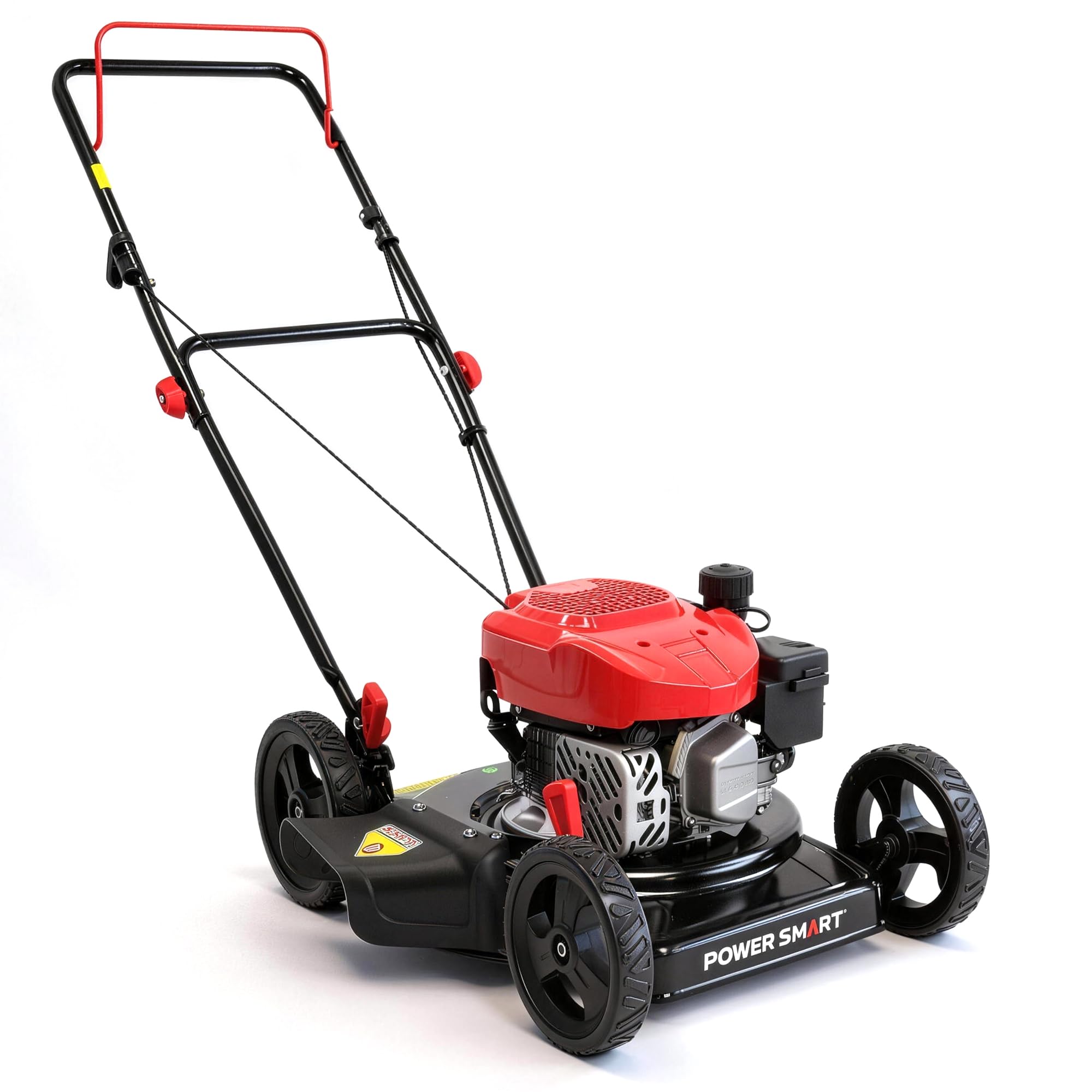
PowerSmart DB8618C
See on Amazon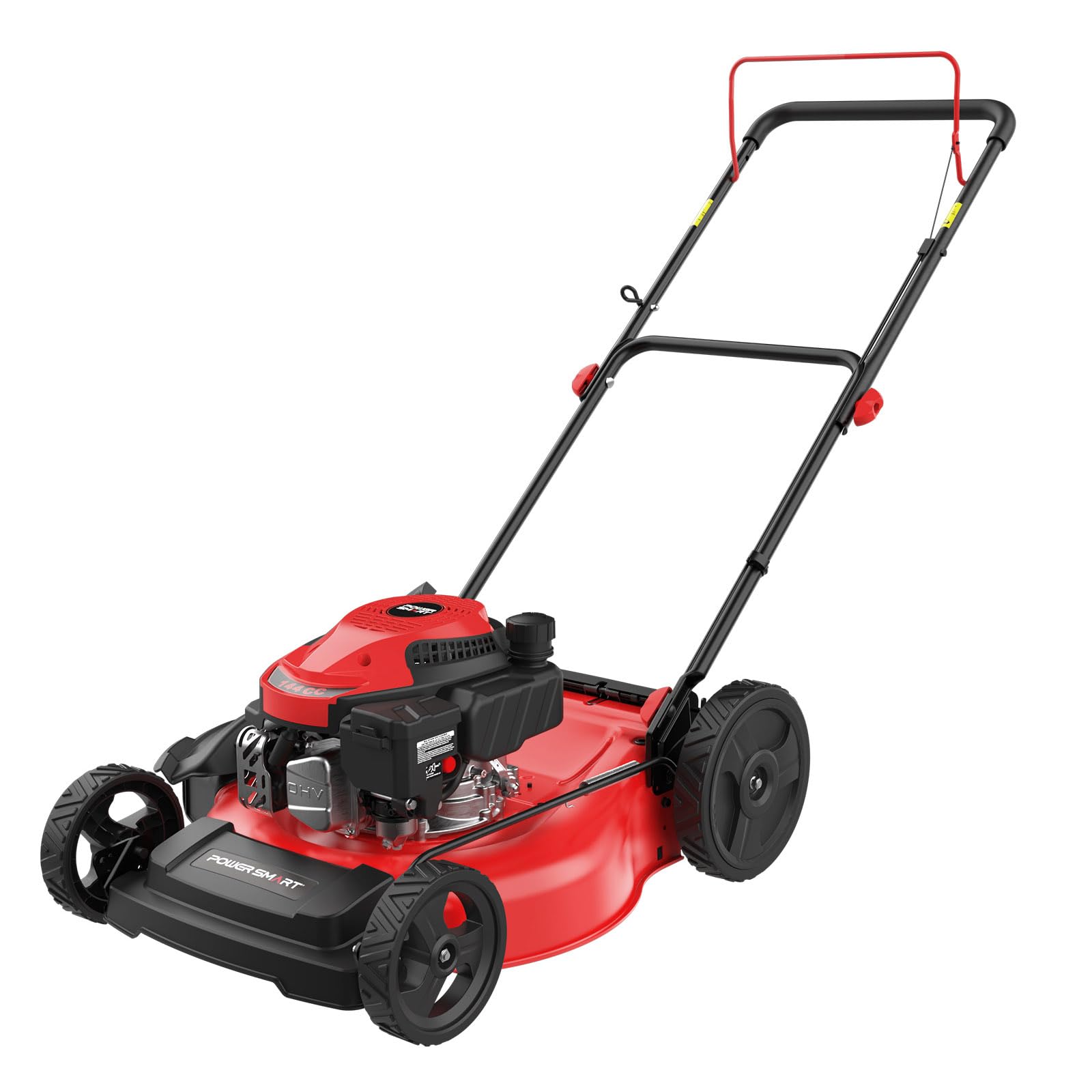
PowerSmart DV8621C 21in gas lawn mower
See on Amazon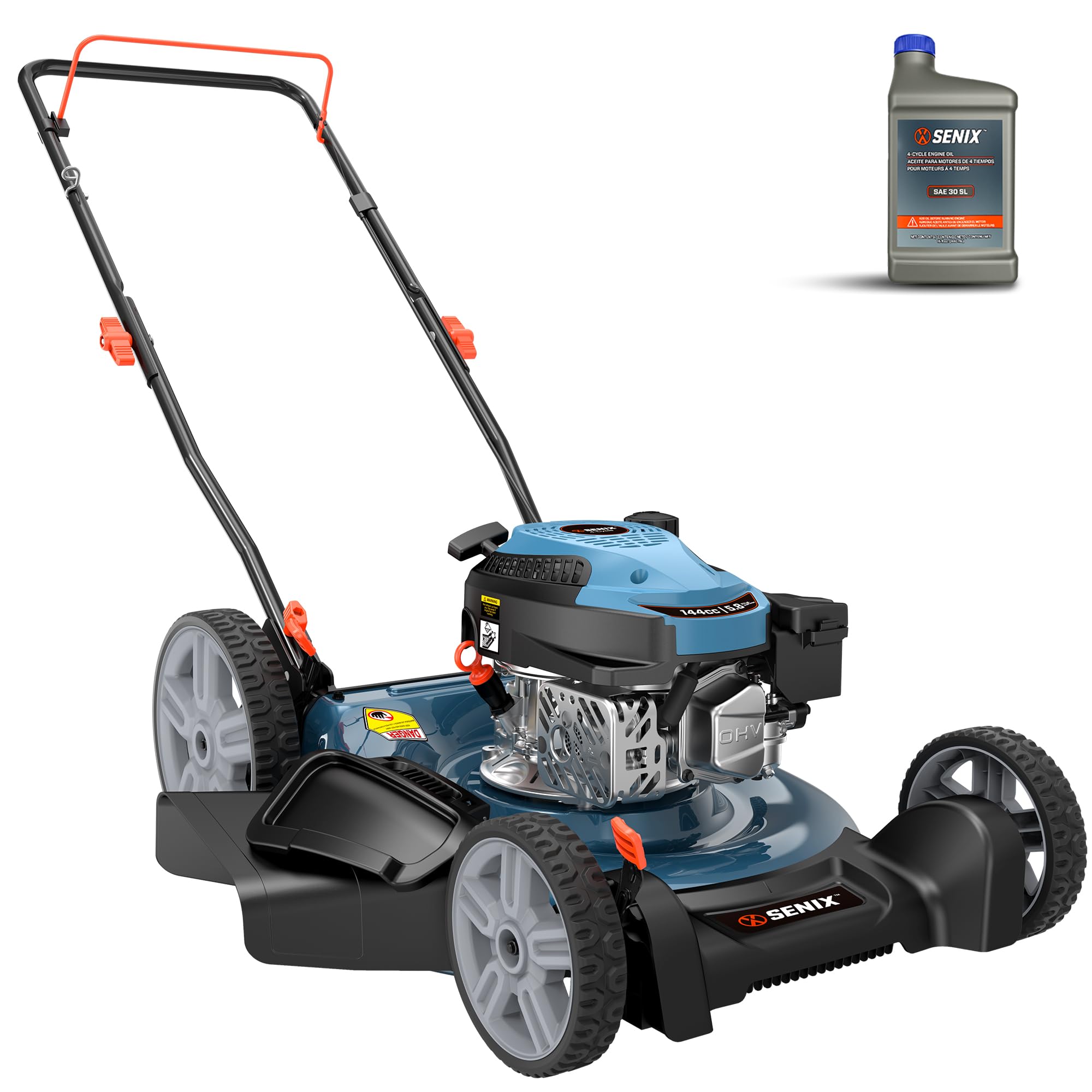
Senix L6
See on AmazonModel comparison
| Model | Price | Rating | Cutting width | Engine displacement | Power source | Best for | |
|---|---|---|---|---|---|---|---|
| | PowerSmart DB8618C | $199.99 as of 10/31 See on Amazon | ★ 4.3 (500+ ratings) | 18 in | 144 cc | Gas powered | Small-yard owners with narrow gates and beds get an 18-inch side-discharge deck that clears clippings fast. |
| | PowerSmart DV8621C 21in gas lawn mower | $269.99 as of 10/31 See on Amazon | ★ 4.3 (400+ ratings) | 21 in | 144 cc | Gasoline | Gas-first buyers who want refuel-and-go simplicity get a 144cc OHV engine with Prime 'N Pull starting and no battery management. |
| | Senix L6 | $249.99 as of 10/31 See on Amazon | ★ 4.1 (400+ ratings) | 21 in | 144 cc | Gasoline | Homeowners on bumpy or patchy ground wanting the easiest push without bagging, answered by 50 pounds and 11-inch wheels. |
 | CRAFTSMAN CMEMW213 | $239.00 as of 10/31 See on Amazon | ★ 4.1 (1,300+ ratings) | 20 in | not stated | Corded electric | Small-lawn owners mowing near a power outlet who want the lightest machine and unlimited runtime with a collection bag. |
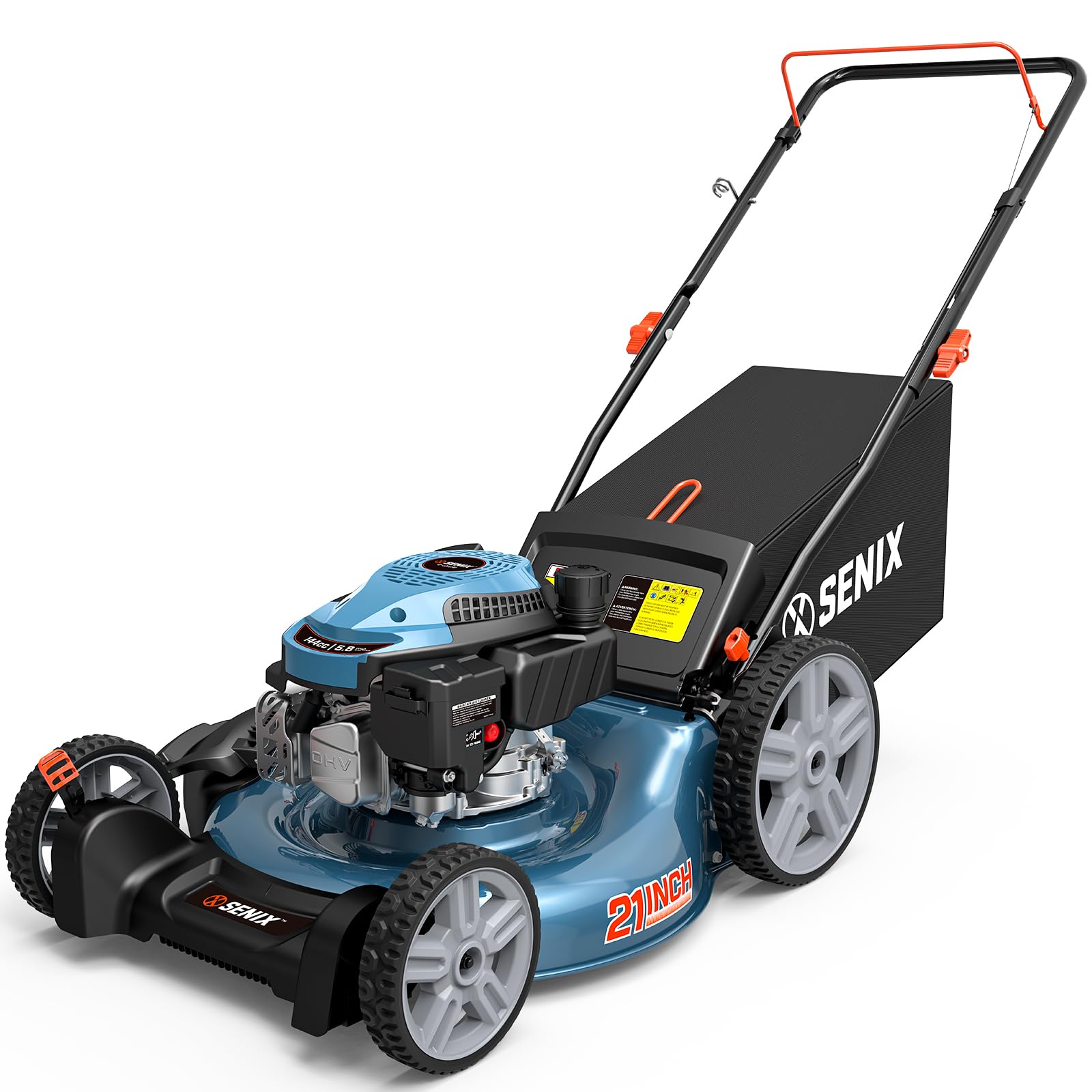 | Senix LSPG-M14 21in gas lawn mower | $225.97 as of 10/31 See on Amazon | ★ 4.0 (550+ ratings) | 21 in | 144 cc | not stated | Buyers who want mulch, bag and side discharge on one deck get all three modes plus the included bag. |
Getting a side discharge push mower through tall, thick grass without clogging
With the discharge opening open, the deck is not trying to hold clippings and recirculate them the way a mulching deck does, and it is not lifting them into a bag. The blade sweeps grass to the chute and the clippings leave. That open path is why side discharge puts the least load on the engine of the three modes: the mower spends its power cutting instead of re-cutting or lifting.
Mulching demands more. Clippings stay under the deck and get hit again and again until they are small enough to fall between the grass plants, and every one of those extra cuts takes engine power. Bagging restricts airflow as the bag fills, so the deck has to lift clippings through a narrowing column of air. In grass that is already tall and thick, both modes reach their limit sooner than the engine does.
For a neglected lawn, the practical result is simple. You can take a full-width pass through grass that would stall a mulching deck, and you keep moving instead of stopping every few strips to empty a bag. The trade-off is honest: the clippings land where they land, so the quality of the result depends on the deck throwing them evenly rather than in clumps.
Why letting the clippings fly out the side keeps your deck clear when the grass is long
Side discharge is the right mode when the grass is taller than the one-third rule allows, meaning you are taking off more than a third of the leaf in one cut. It is also the right mode when grass is thick, wet, or both, when you are cutting a large open area and do not want to stop to empty a bag, and when you are doing a first rough cut on an overgrown lawn before a finer pass.
Mulching wins when grass is dry and you mow often enough to return short clippings. Clippings an inch or less break down and give nutrients back to the soil. Bagging wins when there is disease pressure such as leaf spot, rust or dollar spot, when clippings would land in a street, gutter or storm drain, and during fall leaf cleanup.
Clippings do not cause thatch. Thatch comes from grass vigor, excess nitrogen, infrequent mowing and compaction, so the reason to bag is tidiness, disease control and drainage, not thatch prevention. One more distinction matters: a mulch plug in a side-discharge deck is not a true mulching deck. Closing the chute does not cut clippings a second time or spread them as evenly as a deck designed for mulching.
Choosing a discharge chute that resists clogging
A side-discharge mower is only as good as its deck's airflow. Look for a chute with a smooth, wide, unobstructed opening rather than a narrow slot, and a deflector that hinges freely and stays down under its own weight without sagging into the opening. The deck shape should sweep clippings toward the chute instead of letting them pool in a corner.
Not all discharge decks distribute evenly. Some throw clumps even in good conditions, and a poorly shaped chute is the usual cause of a deck that plugs in tall grass. That is the buying criterion most spec sheets never mention, and it matters more than engine size once you are cutting overgrown grass.
Before you buy, confirm the side discharge chute is actually in the box. Some mowers ship it separately or include it free only on registration, and others put it in the carton. A mower you cannot discharge out of the box is not a side-discharge mower yet.
Setting cut height and ground speed for tall grass
Take tall grass in two passes. On the first, set the deck high, near the top of its range, and cut the full width at a steady walking pace, letting the mower throw clippings into the uncut grass ahead and to the side. Do not try to bring tall grass down to final height in one pass; that is what stalls the engine and leaves clumps.
On the second pass, drop the deck one or two settings and cut again, slower, so the blade has time to cut cleanly rather than tear. The target is the one-third rule: remove no more than a third of the leaf height. If your grass is 6 inches tall, the second pass should leave it at 4 inches, not 2.
Ground speed matters as much as height. Pushing faster than the deck can clear is a common cause of clumping and stalling, especially in damp grass. A sharp blade cuts cleanly and throws clippings better than a dull one, and wet grass is the single biggest reason a side-discharge deck plugs, so mow dry when you can.
Directing discharge safely around people, cars and beds
Plan the direction before you start. Discharge away from windows, vehicles, bystanders, flower beds and the street. Objects struck by the blade can leave the chute at very high speed, so the deflector must stay down and undamaged, and it must never be tied up or propped open to improve flow. That defeats the one thing protecting people and property.
Never discharge toward a wall or obstruction, because material can ricochet back at the operator. Shut the blades off when crossing sidewalks, driveways and roads, and never leave clippings on a road: for a motorcycle, clippings on pavement are equivalent to ice.
On slopes, mow across the face rather than up and down, and keep the discharge side uphill where possible. Around beds, make the passes that throw into the lawn first, then the passes that throw toward the bed last, so you are not blowing clippings into the plants you are trying to protect.
Keeping the discharge path clear between mowings
After each mowing, check the chute and the underside of the deck for packed damp clippings and clear them before they dry hard. Check that the deflector hinges freely and returns to rest: a deflector that sticks open or hangs down into the opening is both a clog risk and a safety problem.
Before storage, run the deck dry and scrape the underside. A deck caked with dried grass loses airflow and starts throwing clumps. Keep the blade sharp, because a dull blade tears grass and produces longer, wetter clippings that pack into the chute.
When you switch modes, with a mulch plug in or a bag on, make sure the chute and opening are clear and the plug or bagger is seated correctly. A partly seated plug is a common cause of a deck that suddenly starts clogging.
Our picks by budget
The PowerSmart DB8618C is our budget pick because side discharge is its discharge mode on a reinforced 18-inch deck, so you pay for the one thing this guide is about and not for mulching or bagging hardware you will not use.
The Senix L6 is our mid-range pick because the extra money goes into a wider 21-inch cut and 11-inch wheels that roll over rough, overgrown ground, with mulching added as an option.
The Senix LSPG-M14 is our premium pick because it puts all three modes on one 21-inch deck, adds the widest height range here, and includes the 1.7-bushel grass bag.
Budget
Mid-range
High-end
Which side-discharge mower for which buyer
Matching the mower to the yard matters more than the spec sheet: an 18-inch deck for a narrow gate, 11-inch wheels for rough ground, a cord for a short run to an outlet.
Small yard, tight access, gas
An 18-inch deck fits narrow gates and beds, side discharge is the mode, and five height positions cover routine cuts.
Wider cut on rough ground
A 21-inch cut and 11-inch wheels roll over thick turf and uneven ground, with mulching as a secondary mode.
All three modes, bagger included
Mulch, bag and side discharge on one 21-inch deck, and a 1.7-bushel bag in the box.
Small yard, no gas storage
A 13-amp corded mower with a 20-inch deck, side discharge chute included, and 20.8 pounds to wheel out and back.
Wide cut with mulch as backup
A 21-inch heavy-duty blade on a steel deck, built to reduce clumps in long, deep grass, with mulching for short dry grass.
Our verdict on the best side-discharge push mowers
The PowerSmart DB8618C is the pick for a compact gas side-discharge mower, with side discharge as its mode on an 18-inch deck. The Senix L6 is the step up for a wider cut and 11-inch wheels on rough ground, the Senix LSPG-M14 is the pick when you want all three modes and the bagger included, and the Craftsman CMEMW213 is the corded answer for a small yard. The PowerSmart DV8621C sits between them for a 21-inch cut with mulching as a backup.
The deck and chute decide whether side discharge clears tall grass, so check that the chute is in the box and that the deflector hinges freely before you buy. Then run the two-pass method: a high pass at walking pace, a lower and slower second pass, and no more than a third of the leaf height removed.
Detailed model analysis
A side-discharge deck clears tall grass only when the chute is open, the deflector sits right and the engine has power to spare, so a smooth, wide chute matters more than a bigger engine.
PowerSmart DB8618C
The PowerSmart DB8618C sends everything out through the side chute. Nothing gets packed into a bag, so in thick grass the engine spends its power cutting instead of lifting clippings.
A 144cc four-cycle OHV engine drives the reinforced 18-inch deck on 8 in wheels. You press the primer bulb, hold the safety bar and pull the starter rope. The mower weighs 58.4 lb.
Dual-lever height adjustment covers 1.5 to 3.9 in. On tall grass, start at the high end and work down. It folds for storage, and a two-year limited warranty covers it.
It wants fresh 87-octane gas with no more than 10% ethanol and no methanol, plus 10W-30 engine oil, which is not included. If the engine is still warm on restart, skip the primer bulb to avoid flooding it.
The limits are clear. An 18 in cut means more passes on a large lawn, there is no bag attachment, and it is not self-propelled, so you push all 58.4 lb yourself.
It suits owners of small or tight yards who want a no-frills gas mower that throws clippings to the side.
- Brand: PowerSmart
- Engine displacement: 144 cc
- Cutting width: 18 in
- Cutting height: 1.5 to 3.9 in
- Power source: Gas powered
- Weight: 58.4 lb
PowerSmart DV8621C 21in gas lawn mower
The PowerSmart DV8621C 21in gas lawn mower has a wide 21-inch steel deck for open lawns and long, deep grass. Its heavy-duty blade cuts fine clippings, and you can run it in side discharge or mulching mode.
A 144cc four-cycle OHV engine powers it. Prime 'N Pull starting with auto choke keeps it simple: press the primer three times, hold the start bar and pull the rope.
A single lever sets one of 6 cutting heights. High rear wheels, 8 in across, make pushing easier, and the handle folds for compact storage.
It arrives 90% pre-assembled, and setup needs no tools. A two-year limited warranty comes with it, and replacement blades are available through the seller.
It is a push mower with no self-propelled drive, so you move all 59.4 lb yourself. Run the engine until the fuel is used up before storage, and change the oil each season.
It takes fresh 87-octane gas with no more than 10% ethanol and no methanol. Use 10W-30 oil, never mixed with the gasoline. It suits gas-first owners of open lawns.
- Brand: PowerSmart
- Engine displacement: 144 cc
- Cutting width: 21 in
- Power source: Gasoline
- Weight: 59.4 lb
- Cutting height positions: 6
Senix L6
This Senix 21-inch gas mower suits bumpy lawns. It rolls on 11 in wheels, and larger wheels roll over bumps and dips more easily on uneven or patchy ground.
The rotary deck cuts a full 21 inches wide, driven by a 144cc four-cycle engine. Cutting modes are side discharge and 2-in-1 mulching, which leaves finely cut clippings on the lawn.
Six height positions let you raise the deck for tall grass and lower it as the lawn evens out.
It is a manual push mower, so you supply the forward motion. It runs on gas, which means fuel and engine upkeep that an electric mower avoids.
We see it fitting homeowners with bumpy or patchy ground who want an easy push without bagging.
- Brand: Senix
- Engine displacement: 144 cc
- Cutting width: 21 in
- Power source: Gasoline
- Engine type: 4-cycle
- Cutting height positions: 6
CRAFTSMAN CMEMW213
The Craftsman CMEMW213 is a corded electric mower. A 13 amp motor turns winged blades on a 20-inch deck, powered straight from an outlet. Runtime is unlimited as long as the cord reaches.
It weighs 20.8 lb, far below the PowerSmart DB8618C at 58.4 lb, so pushing and lifting it takes much less effort. Folding handles and an easy transport handle make it simpler to store and carry.
The 3-in-1 design covers bagging, mulching and side discharge. A collection bag and a side discharge chute are both included. Cutting height adjusts from 1.5 to 4 in.
The cord is the main limit. You need an outlet within reach, and the cord restricts how far you can mow.
At 20 in, the cut is narrower than the 21 in on the Senix LSPG-M14 21in gas lawn mower. It is also a push mower, not self-propelled.
It suits small-lawn owners near an outlet who want the lightest machine with a bag.
- Brand: Craftsman
- Cutting width: 20 in
- Power source: Corded electric
- Motor: 13 A
- Cutting height: 1.5 to 4 in
- Dimensions: 33.8 in long, 21.95 in wide and 15.06 in high
Senix LSPG-M14 21in gas lawn mower
The Senix LSPG-M14 puts three modes on one 21-inch deck: mulching, bagging and side discharge. A 144cc four-stroke engine powers it.
The included grass bag holds 1.7 bushels, so in tall, heavy growth a full bag means a stop to empty it.
Six height positions run from 1.25 to 3.75 in. The low end suits a tight final cut, while the 3.75 in top setting is the main limit for the tallest grass.
It rolls on 8 in wheels and weighs 54.2 lb. As a gas, manual push mower, it leaves you to supply the forward motion and handle fuel.
It suits buyers who want mulch, bag and side discharge on one deck: bag for a tidy look, mulch for quick passes.
- Brand: Senix
- Engine displacement: 144 cc
- Cutting width: 21 in
- Cutting height: 1.25 in to 3.75 in
- Wheel size: 8 in
- Weight: 54.2 lb
Frequently asked questions
Clippings left on the lawn do not build thatch, and a mulch plug does not turn a discharge deck into a mulching mower, two points that decide how you run the machine.
Does side discharge cause thatch?
No. Thatch builds up from vigorous grass, too much nitrogen, mowing too rarely and compacted soil. Clippings are mostly water, break down quickly and return nutrients, so leaving them on the lawn does not add to the thatch layer.
Why does my side-discharge mower clog in tall grass?
Wet grass, a dull blade, a deck caked with dried clippings underneath, or an obstructed chute and deflector are the usual causes. Clear the deck and chute, sharpen the blade, and mow when the grass is dry, and the deck stops plugging.
How many height positions does the PowerSmart DB8618C offer for tall grass?
The PowerSmart DB8618C gives you five height positions, which is enough to start near the top of the range for an overgrown first cut and then work down over later passes. The Senix L6 and the Senix LSPG-M14 both run on a 21-inch deck.
Is the side discharge chute always included?
Not always. Some mowers ship the chute separately or include it free only after registration, while others put it in the carton. Confirm it is in the box before you buy, or you will not be able to discharge on the first mowing.
What mowing pattern works best for side discharge?
Make two laps around the lawn discharging inward into the uncut grass, then alternate directions along the axis you want. For tall grass, take a high pass first and a lower, slower pass second.
Is side discharge safe near a road or sidewalk?
Only with the deflector down and undamaged, discharge aimed away from people and traffic, the blades off when you cross pavement, and no clippings left on the road. Clippings on asphalt are as slippery as ice for a motorcycle.
Can I tie up the deflector to improve flow?
No. Tying it up or propping it open removes the guard that stops struck objects from flying out of the chute, and it is a known dangerous practice. If the deck plugs, fix the cause instead.